

Counter Surveillance in Urban Security: Detecting the Watchers
One of the most critical stages of a security threat is the weeks of structured observation that made it possible. It includes the repeated presence outside a building, the patient monitoring of staff movements, and the careful mapping of entry/exit points. For most organisations operating in urban environments, it remains the missing layer in an otherwise structured security programme.
What Is Hostile Surveillance and Why It Matters
Hostile surveillance is a deliberate, structured process through which criminals, terrorists, and other threat actors gather intelligence about a target before acting. It is not casual observation. It is methodical information gathering – designed to identify vulnerabilities, understand operational patterns, and select the moment of least resistance.
The intelligence community has long understood that reconnaissance is not incidental to an attack. It is integral to it. Studies of major terrorist incidents and targeted criminal operations consistently show that hostile surveillance preceded the event — in some cases by months. The 2005 London bombings, the 2013 Woolwich attack, and multiple foiled plots across Europe all involved identifiable pre-attack surveillance activity.
For organisations operating in urban environments – corporate headquarters, government buildings, transport hubs and publicly accessible sites – this matters for one reason above all others: surveillance is detectable. It leaves behavioural and environmental indicators that a trained eye can identify. The question is not whether hostile reconnaissance is taking place. In high-profile and high-value environments, it is almost certain. The question is whether your security programme is designed to find it.
How Hostile Actors Conduct Surveillance
Understanding how hostile surveillance is conducted is essential to detecting it. In urban environments, threat actors use a combination of methods to observe targets, identify vulnerabilities, and build a picture of security routines while minimising the risk of detection.
- Static Observation: The most common form of hostile surveillance involves repeated presence at a fixed location – loitering near an entrance, sitting in a parked vehicle with a consistent sightline to a target, or occupying a position that allows unobstructed observation of staff movements, access points, and security routines. What distinguishes hostile static observation from ordinary behaviour is pattern – the same individual or vehicle appearing at irregular intervals, across different times of day, over an extended period.
- Mobile Surveillance: Threat actors also conduct surveillance on the move – on foot or by vehicle – mapping the routes taken by key personnel, identifying blind spots in CCTV coverage, and testing security response times by approaching and retreating from a perimeter. Mobile surveillance is harder to detect precisely because it blends into the normal movement of an urban environment.
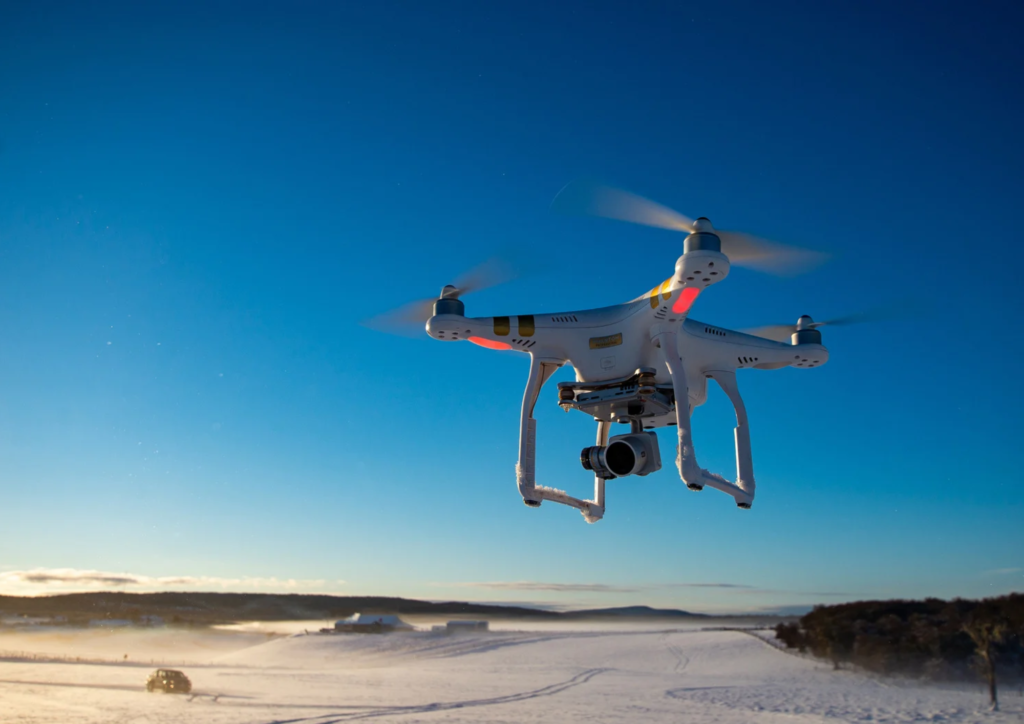
- Technical Surveillance: The increasing availability of consumer drone technology has significantly expanded the toolkit available to hostile actors. Drones allow reconnaissance of sites that are difficult to observe from ground level, rooftops, secure compounds, and perimeter-sensitive areas – with minimal physical presence near the target. Similarly, long-range camera equipment and publicly accessible satellite imagery allow detailed observation without any physical proximity to the site.
- Commercial Location Data: Location data harvested from mobile phones and apps is bought and sold through commercial data brokers. In the wrong hands, this data can be used to establish where key personnel live, work and travel, identify routine movement patterns, and build a picture of who visits a site and when – all without the hostile actor ever setting foot near the target. Combined with AI-driven analysis, large volumes of device data can be sifted quickly to identify individuals of interest and track their movements over time.
- Open-Source Intelligence: Hostile actors increasingly exploit publicly available information – social media profiles of key personnel, corporate websites, event announcements, and mapping tools — to conduct reconnaissance without ever visiting a location. An organisation’s digital footprint can reveal staffing patterns, leadership movements, access point layouts, and operational routines to anyone with the time and intent to look.
What Organisations Are Missing in the security approach?
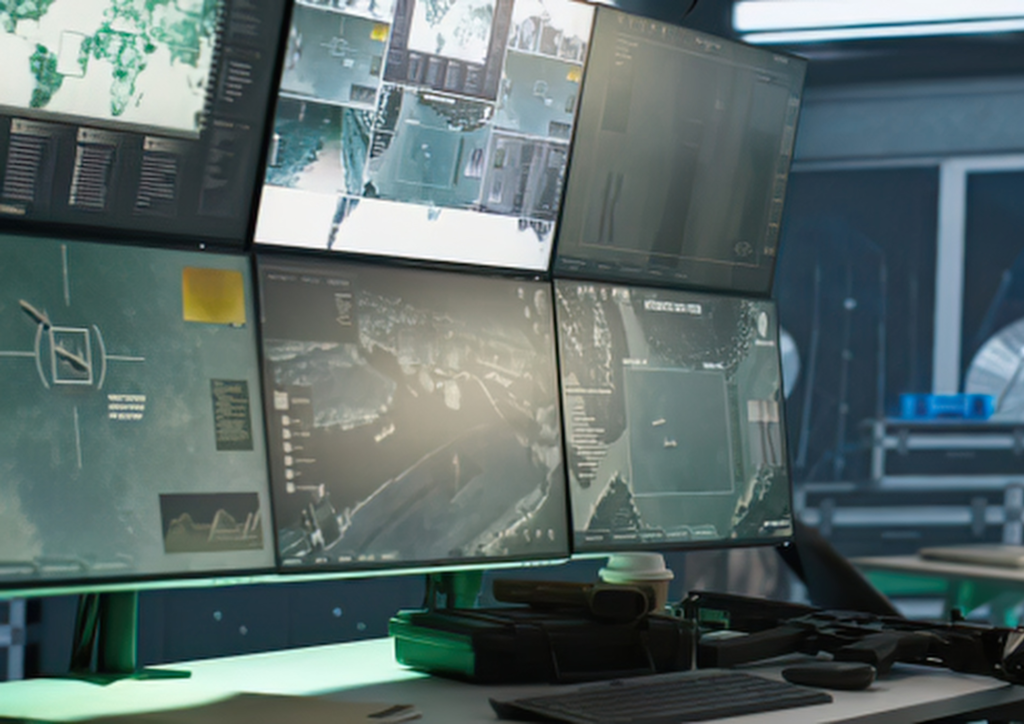
Most urban security programmes are designed around a fundamental assumption – that the threat begins at the perimeter. Access control, CCTV coverage, security personnel, and alarm systems are all oriented toward what happens when a threat arrives at the boundary of a site. They are reactive in design.
What this approach consistently fails to account for is the period before the threat reaches the perimeter – the reconnaissance phase during which hostile actors are gathering the intelligence that makes their operation possible.
The consequence is a security programme that is well-equipped to respond to an incident but poorly positioned to prevent one. CCTV systems are pointed inward. Security personnel are focused on access management. Threat assessments are built around historical incidents rather than current surveillance activity. And the behavioural indicators that would identify a hostile actor in the observation phase go unrecognised – not because they are absent, but because the programme was never designed to look for them.
This is the gap that counter-surveillance addresses. And in urban environments — where the boundary between public space and secured sites is rarely clearly defined — it is a gap that carries significant consequence.
The Indicators Organisations Should Be Looking For
Hostile surveillance leaves traces. The challenge for most security teams is not the absence of indicators; it is the absence of a structured framework for recognising and recording them. The following behavioural and environmental indicators should form the foundation of any counter-surveillance awareness programme operating in an urban security environment.
- Repeated Presence: The most reliable indicator of hostile surveillance is repetition. Multiple appearances of the same individual or vehicle near a site with no apparent legitimate purpose warrant attention.
- Unusual Interest in Security Measures: Deliberate attention to CCTV positions, security personnel, entry/exit points or perimeter layouts should be recorded. This includes photographing or filming security infrastructure and operational areas.
- Timing That Does Not Fit: Activity around shift changes, delivery windows, peak footfall periods or times when security resources are reduced may indicate attempts to understand operational routines.
- Drone Activity: Unusual drone activity near or above a site, particularly outside normal flight patterns or without an apparent recreational purpose, should be treated as a potential surveillance indicator and investigated.
- Digital Reconnaissance Signals: Repeated interest in publicly available floor plans, mapping tools, or social media profiles of senior personnel may indicate online reconnaissance. Organisations should monitor their digital footprint as part of their wider counter-surveillance approach.
- Insider Indicators: Employees, contractors or visitors showing unusual interest in access control systems, security procedures or restricted areas beyond their legitimate responsibilities should be flagged through an established internal reporting process.
What a Structured Counter-Surveillance Approach Looks Like
Effective counter-surveillance is a discipline that must be embedded into the wider security programme. It is designed around the specific environment, threat profile, and operational realities of each organisation.
In practice, a structured counter-surveillance approach requires six things to work together.
- Environmental Assessment: understanding what can be observed about your site, your people, and your operational patterns from outside the perimeter. If a hostile actor can see it, your security programme should account for it.
- Behavioural Detection Training: equipping security personnel with the knowledge and framework to recognise, record, and escalate surveillance indicators consistently and confidently.
- Surveillance Detection Protocols: clear, tested procedures that define how suspicious activity is logged, investigated, and responded to before it escalates.
- Integration with Security Design: counter-surveillance capability must inform how sites are physically designed, how CCTV is positioned, and how command environments are structured to support early detection.
- Continuous Monitoring: hostile surveillance is not a one-time event. Neither is counter-surveillance. It requires ongoing vigilance, regular reassessment, and a security culture that treats early detection as a priority.
- Device-Based Threat Detection: The same commercially available location data that hostile actors can exploit can also support detection. Where lawful and proportionate, analysis of device data can help identify devices repeatedly present near a site, match them against known persons of interest, and generate real-time alerts as they approach a premises or area of concern. Used responsibly, this gives security teams an early-warning capability that extends well beyond the perimeter.
What a Structured Counter-Surveillance Approach Looks Like
Effective countersurveillance is a discipline that must be embedded into the wider security programme. It is designed around the specific environment, threat profile, and operational realities of each organisation.
In practice, a structured counter-surveillance approach requires five things working together.
- Environmental Assessment — understanding what can be observed about your site, your people, and your operational patterns from outside the perimeter. If a hostile actor can see it, your security programme should account for it.
- Behavioural Detection Training — equipping security personnel with the knowledge and framework to recognise, record, and escalate surveillance indicators consistently and confidently.Surveillance Detection Protocols — clear, tested procedures that define how suspicious activity is logged, investigated, and responded to — before it escalates.
- Integration with Security Design — counter-surveillance capability must inform how sites are physically designed, how CCTV is positioned, and how command environments are structured to support early detection.
- Continuous Monitoring — hostile surveillance is not a one-time event. Neither is counter-surveillance. It requires ongoing vigilance, regular reassessment, and a security culture that treats early detection as a priority.
Why This Matters Now
The threat environment facing urban security professionals in 2026 is more sophisticated, more patient, and more deliberate than it has ever been. Hostile actors are better informed, better equipped, and increasingly capable of conducting structured reconnaissance that goes entirely undetected by conventional security programmes.
The organisations that will manage this most effectively are not necessarily those with the largest security budgets. They are the ones that understand a fundamental truth — that the earliest and most actionable intelligence about a threat is almost always available during the surveillance phase, long before an incident occurs.
Counter-surveillance is not a capability reserved for government agencies and high-profile targets. In 2026, it is a necessary layer of any serious urban security programme.
For WWDCS, addressing this challenge starts with understanding how people, places, and operational environments can be observed and exploited before a threat materialises. This perspective informs the way urban security risks must be assessed, with greater attention to hostile reconnaissance and the vulnerabilities it can expose.
If your organisation has not assessed its exposure to hostile surveillance or structured a capability to detect it, that assessment is the right place to start.