

Supply Chain Security: The Blind Spot Boards Can No Longer Ignore
A board approves a new tier-2 supplier with contracts signed and compliance boxes ticked. Eight months later, an operational breach occurred. Not through their own facility, but through a connected partner. The investigation reveals the vulnerability had existed for months, visible to anyone looking, invisible to everyone responsible. In 2026, this is not an assumption. It has become a pattern.
What This Means for Boards
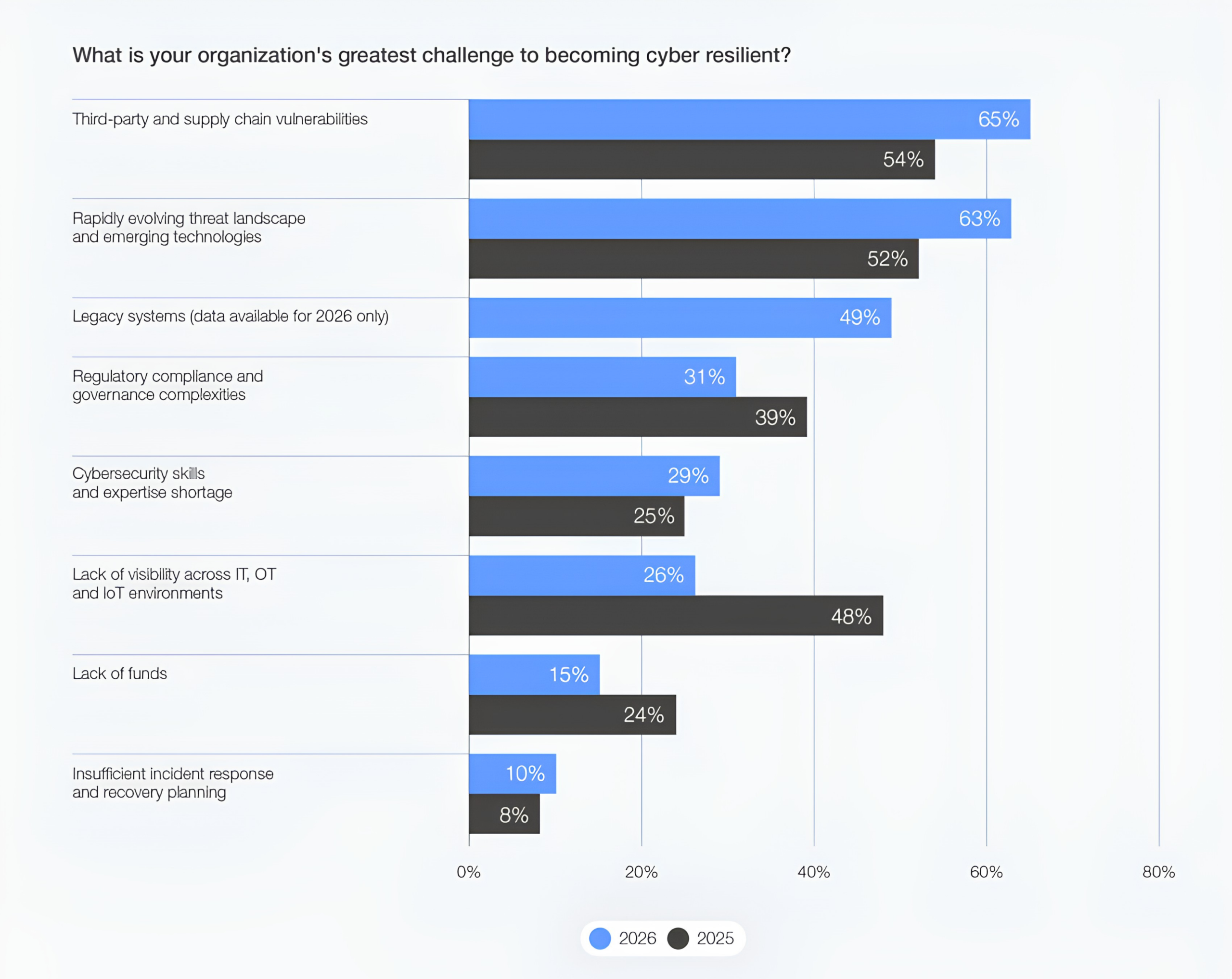
The World Economic Forum’s (WEF) 2026 report highlights third-party and supply-chain vulnerabilities as a major challenge to organisational resilience. Yet many organisations still lack a clear picture of their wider supplier networks, making it difficult to assess how a disruption at one supplier could affect operations elsewhere.
Many organisations still have limited visibility beyond their immediate suppliers, making it difficult to identify emerging risks before they become operational problems. The perimeter extends beyond an organisation’s own premises to include supplier sites and contractor facilities.
Why The Blind Spot Persists
The problem is not awareness. Most organisations recognise the vulnerability, yet 78% admit their internal security programmes cover less than 50% of their total vendor ecosystem. Why does this gap persist?
Three structural failures keep it open.
- First, a visibility gap: only 41% of organisations monitor risk beyond their direct suppliers. Tier-2 and Tier-3 partners operate almost entirely unseen.
- Second, an accountability gap: security responsibility diffuses across procurement, legal, and operations, with no single function truly owning supplier risk.
- Third, and most critically, an assumption gap: ISO certifications, SOC 2 reports, and supplier security questionnaires create the appearance of diligence without reducing risk. Compliance frameworks are minimum baselines and not security guarantees.
In practice, a supplier may meet contractual requirements while weaknesses remain in site access controls, and incident reporting. Unless these arrangements are assessed beyond the immediate supplier, gaps may only become apparent when an incident disrupts operations.
The 2026 Shift: Governance and Resilience
The regulatory landscape has strengthened the role of senior leadership in supply chain security. Under NIS2 and DORA, management bodies have defined responsibilities for overseeing cybersecurity and digital operational resilience, including the approval and supervision of relevant risk-management measures.
In the US, SEC disclosure requirements also place greater emphasis on board oversight of material cybersecurity risks. Together, these developments reinforce the importance of effective governance, clear accountability, and ongoing risk management across the supply chain.
The question boards are now being asked by regulators, investors, and insurers is:
Can you demonstrate that your security posture extends across your entire operational ecosystem?
For most organisations, the honest answer remains no.
What End-To-End Security Actually Looks Like
Most organisations now recognise that supply chain security is not just a procurement issue. It has a direct impact on business continuity, resilience, and reputation.
In practice, this means four things working together. First, tiered supplier risk classification, so security architecture must reflect actual exposure levels. Second, physical and operational assessments beyond digital audits including site access controls, personnel vetting, and facility vulnerability reviews at contractor and partner locations. Third, integrated incident response protocols that extend beyond an organisation’s own perimeter, and fourth, real-time visibility through live monitoring platforms that help identify emerging threats across connected environments.
The Value of Cross-Environment Experience
Organisations facing supply chain challenges often assume that their risks are unique. Many sectors face similar problems. Lessons learned in critical infrastructure, logistics, border security, and industrial environments can often be applied elsewhere. The key is understanding where dependencies exist and where disruption is most likely to occur.
A weakness in contractor access controls, gaps in supplier oversight or unclear incident response procedures can create risks across different environments. Understanding how these issues emerge, and how they affect operational continuity, helps organisations identify vulnerabilities earlier and take practical steps to reduce the likelihood and impact of disruption.
The Question Every Board Must Now Answer
Supply chain security is no longer simply a procurement, operational, or cyber issue. It is a business resilience issue that requires Board-level attention. Organisations that understand their dependencies, look beyond their immediate suppliers, and maintain visibility across their wider operating environment will be far better placed to prevent disruption and respond effectively when incidents occur.